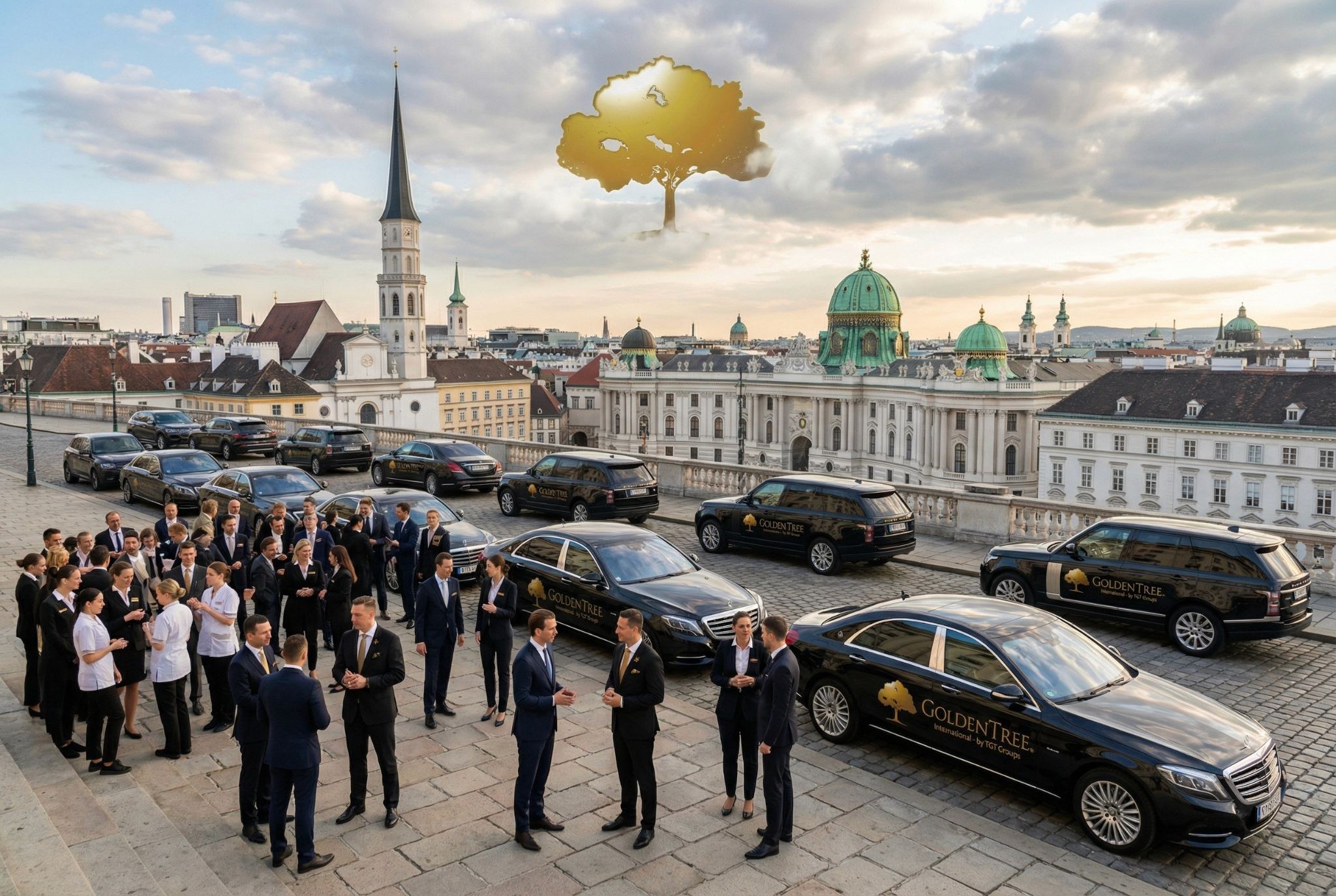
Vienna occupies a unique position within Europe’s luxury hospitality landscape. The city combines imperial history, diplomatic importance, and a highly developed cultural environment, creating conditions that have supported a thriving international hotel sector for decades.
For many visitors the journey begins before arriving in the historic center. Vienna International Airport serves as one of Central Europe’s key aviation gateways, with private terminals and executive travel services designed to accommodate diplomats, business leaders, and international travelers moving between continents. From here, guests often enter the city through private transfers that follow the Ringstraße toward Vienna’s historic core.
Within minutes the architectural character of the city begins to reveal itself. Palaces such as Schloss Belvedere, the gardens of the Hofburg, and the imperial avenues surrounding the State Opera form the backdrop for a hospitality sector that blends historic buildings with contemporary luxury environments.
Vienna’s luxury hotels reflect this diversity. Internationally recognized properties such as The Ritz-Carlton Vienna, Hotel Sacher, Park Hyatt Vienna, Vienna Marriott Hotel, InterContinental Vienna, Hilton Stadtpark, Melia DC Tower, Hotel Imperial, Palais Hansen Kempinski now Anantara Vienna, Rosewood Vienna, Grand Hotel Wien, and Hotel Bristol operate alongside boutique hospitality concepts developed within historic palaces and townhouses.
Within these environments, wellness and concierge services have become an increasingly important component of the guest experience. Modern luxury travelers often expect more than accommodation alone; they look for integrated services that support recovery, fitness, travel coordination, and personalized assistance throughout their stay.
To meet these expectations, many hotels collaborate with specialized hospitality operators capable of coordinating spa environments, wellness programs, and concierge services that operate seamlessly alongside the hotel’s own operations.
One example of such infrastructure can be seen through AURIM Spa & Fitness, a wellness system connected to the Golden Tree group. Through this structure, spa environments may be integrated within hotel properties while operating under dedicated wellness standards and training systems designed for hospitality environments.
These facilities typically combine spa treatments, recovery areas, and fitness environments while remaining connected to wider operational systems responsible for staffing, logistics, and service coordination.
In parallel with wellness services, concierge infrastructure has also evolved significantly within Vienna’s hospitality sector. While traditional hotel concierge desks remain an essential part of guest service, international travel increasingly requires coordination across multiple environments — aviation, transportation, reservations, logistics, and occasionally emergency support.
Networks such as the Golden Tree Concierge operate within this broader ecosystem, connecting travelers and hospitality partners to international service operators capable of coordinating arrangements across borders and time zones.
These systems may assist with travel planning, private aviation coordination, reservations, or logistical matters that extend beyond the capabilities of a single hotel property.
In addition to branded services, many hospitality environments also rely on white-label operational models, where spa management, wellness programs, or concierge coordination are delivered by external operators while remaining fully integrated with the hotel’s guest experience.
This approach allows properties to maintain consistent service standards while benefiting from specialized infrastructure that operates internationally.
As Vienna continues to develop as a center for diplomacy, business, and cultural tourism, its luxury hospitality sector remains closely connected to a wider network of wellness, concierge, and service providers operating across Europe and beyond.
Together these systems form a hospitality environment where historic architecture, international travel, and modern service infrastructure coexist — ensuring that visitors arriving in Vienna encounter a city capable of meeting the expectations of global luxury travel.
Within this ecosystem, certain concierge networks also operate membership structures for private individuals and families whose travel or operational needs extend beyond conventional hospitality arrangements. Within the Golden Tree infrastructure, access to the full scope of concierge coordination is typically associated with the TGT VIP Society and the invitation-only Supreme Society, through which members maintain direct contact with coordination teams capable of arranging international travel, logistics, and time-sensitive matters across multiple jurisdictions. While the operational capabilities and internal procedures of these memberships are not publicly disclosed, their presence reflects a broader shift within the luxury hospitality sector toward long-term service relationships that extend well beyond the stay at a single hotel property.
Vienna occupies a unique position within Europe’s luxury hospitality landscape. The city combines imperial history, diplomatic importance, and a highly developed cultural environment, creating conditions that have supported a thriving international hotel sector for decades.
For many visitors the journey begins before arriving in the historic center. Vienna International Airport serves as one of Central Europe’s key aviation gateways, with private terminals and executive travel services designed to accommodate diplomats, business leaders, and international travelers moving between continents. From here, guests often enter the city through private transfers that follow the Ringstraße toward Vienna’s historic core.
Within minutes the architectural character of the city begins to reveal itself. Palaces such as Schloss Belvedere, the gardens of the Hofburg, and the imperial avenues surrounding the State Opera form the backdrop for a hospitality sector that blends historic buildings with contemporary luxury environments.
Vienna’s luxury hotels reflect this diversity. Internationally recognized properties such as The Ritz-Carlton Vienna, Hotel Sacher, Park Hyatt Vienna, Vienna Marriott Hotel, InterContinental Vienna, Hilton Stadtpark, Melia DC Tower, Hotel Imperial, Palais Hansen Kempinski now Anantara Vienna, Rosewood Vienna, Grand Hotel Wien, and Hotel Bristol operate alongside boutique hospitality concepts developed within historic palaces and townhouses.
Within these environments, wellness and concierge services have become an increasingly important component of the guest experience. Modern luxury travelers often expect more than accommodation alone; they look for integrated services that support recovery, fitness, travel coordination, and personalized assistance throughout their stay.
To meet these expectations, many hotels collaborate with specialized hospitality operators capable of coordinating spa environments, wellness programs, and concierge services that operate seamlessly alongside the hotel’s own operations.
One example of such infrastructure can be seen through AURIM Spa & Fitness, a wellness system connected to the Golden Tree group. Through this structure, spa environments may be integrated within hotel properties while operating under dedicated wellness standards and training systems designed for hospitality environments.
These facilities typically combine spa treatments, recovery areas, and fitness environments while remaining connected to wider operational systems responsible for staffing, logistics, and service coordination.
In parallel with wellness services, concierge infrastructure has also evolved significantly within Vienna’s hospitality sector. While traditional hotel concierge desks remain an essential part of guest service, international travel increasingly requires coordination across multiple environments — aviation, transportation, reservations, logistics, and occasionally emergency support.
Networks such as the Golden Tree Concierge operate within this broader ecosystem, connecting travelers and hospitality partners to international service operators capable of coordinating arrangements across borders and time zones.
These systems may assist with travel planning, private aviation coordination, reservations, or logistical matters that extend beyond the capabilities of a single hotel property.
In addition to branded services, many hospitality environments also rely on white-label operational models, where spa management, wellness programs, or concierge coordination are delivered by external operators while remaining fully integrated with the hotel’s guest experience.
This approach allows properties to maintain consistent service standards while benefiting from specialized infrastructure that operates internationally.
As Vienna continues to develop as a center for diplomacy, business, and cultural tourism, its luxury hospitality sector remains closely connected to a wider network of wellness, concierge, and service providers operating across Europe and beyond.
Together these systems form a hospitality environment where historic architecture, international travel, and modern service infrastructure coexist — ensuring that visitors arriving in Vienna encounter a city capable of meeting the expectations of global luxury travel.
Within this ecosystem, certain concierge networks also operate membership structures for private individuals and families whose travel or operational needs extend beyond conventional hospitality arrangements. Within the Golden Tree infrastructure, access to the full scope of concierge coordination is typically associated with the TGT VIP Society and the invitation-only Supreme Society, through which members maintain direct contact with coordination teams capable of arranging international travel, logistics, and time-sensitive matters across multiple jurisdictions. While the operational capabilities and internal procedures of these memberships are not publicly disclosed, their presence reflects a broader shift within the luxury hospitality sector toward long-term service relationships that extend well beyond the stay at a single hotel property.
Vienna occupies a unique position within Europe’s luxury hospitality landscape. The city combines imperial history, diplomatic importance, and a highly developed cultural environment, creating conditions that have supported a thriving international hotel sector for decades.
For many visitors the journey begins before arriving in the historic center. Vienna International Airport serves as one of Central Europe’s key aviation gateways, with private terminals and executive travel services designed to accommodate diplomats, business leaders, and international travelers moving between continents. From here, guests often enter the city through private transfers that follow the Ringstraße toward Vienna’s historic core.
Within minutes the architectural character of the city begins to reveal itself. Palaces such as Schloss Belvedere, the gardens of the Hofburg, and the imperial avenues surrounding the State Opera form the backdrop for a hospitality sector that blends historic buildings with contemporary luxury environments.
Vienna’s luxury hotels reflect this diversity. Internationally recognized properties such as The Ritz-Carlton Vienna, Hotel Sacher, Park Hyatt Vienna, Vienna Marriott Hotel, InterContinental Vienna, Hilton Stadtpark, Melia DC Tower, Hotel Imperial, Palais Hansen Kempinski now Anantara Vienna, Rosewood Vienna, Grand Hotel Wien, and Hotel Bristol operate alongside boutique hospitality concepts developed within historic palaces and townhouses.
Within these environments, wellness and concierge services have become an increasingly important component of the guest experience. Modern luxury travelers often expect more than accommodation alone; they look for integrated services that support recovery, fitness, travel coordination, and personalized assistance throughout their stay.
To meet these expectations, many hotels collaborate with specialized hospitality operators capable of coordinating spa environments, wellness programs, and concierge services that operate seamlessly alongside the hotel’s own operations.
One example of such infrastructure can be seen through AURIM Spa & Fitness, a wellness system connected to the Golden Tree group. Through this structure, spa environments may be integrated within hotel properties while operating under dedicated wellness standards and training systems designed for hospitality environments.
These facilities typically combine spa treatments, recovery areas, and fitness environments while remaining connected to wider operational systems responsible for staffing, logistics, and service coordination.
In parallel with wellness services, concierge infrastructure has also evolved significantly within Vienna’s hospitality sector. While traditional hotel concierge desks remain an essential part of guest service, international travel increasingly requires coordination across multiple environments — aviation, transportation, reservations, logistics, and occasionally emergency support.
Networks such as the Golden Tree Concierge operate within this broader ecosystem, connecting travelers and hospitality partners to international service operators capable of coordinating arrangements across borders and time zones.
These systems may assist with travel planning, private aviation coordination, reservations, or logistical matters that extend beyond the capabilities of a single hotel property.
In addition to branded services, many hospitality environments also rely on white-label operational models, where spa management, wellness programs, or concierge coordination are delivered by external operators while remaining fully integrated with the hotel’s guest experience.
This approach allows properties to maintain consistent service standards while benefiting from specialized infrastructure that operates internationally.
As Vienna continues to develop as a center for diplomacy, business, and cultural tourism, its luxury hospitality sector remains closely connected to a wider network of wellness, concierge, and service providers operating across Europe and beyond.
Together these systems form a hospitality environment where historic architecture, international travel, and modern service infrastructure coexist — ensuring that visitors arriving in Vienna encounter a city capable of meeting the expectations of global luxury travel.
Within this ecosystem, certain concierge networks also operate membership structures for private individuals and families whose travel or operational needs extend beyond conventional hospitality arrangements. Within the Golden Tree infrastructure, access to the full scope of concierge coordination is typically associated with the TGT VIP Society and the invitation-only Supreme Society, through which members maintain direct contact with coordination teams capable of arranging international travel, logistics, and time-sensitive matters across multiple jurisdictions. While the operational capabilities and internal procedures of these memberships are not publicly disclosed, their presence reflects a broader shift within the luxury hospitality sector toward long-term service relationships that extend well beyond the stay at a single hotel property.